
Top Reasons Meta Ads Are a Predictable Growth Engine for Brands

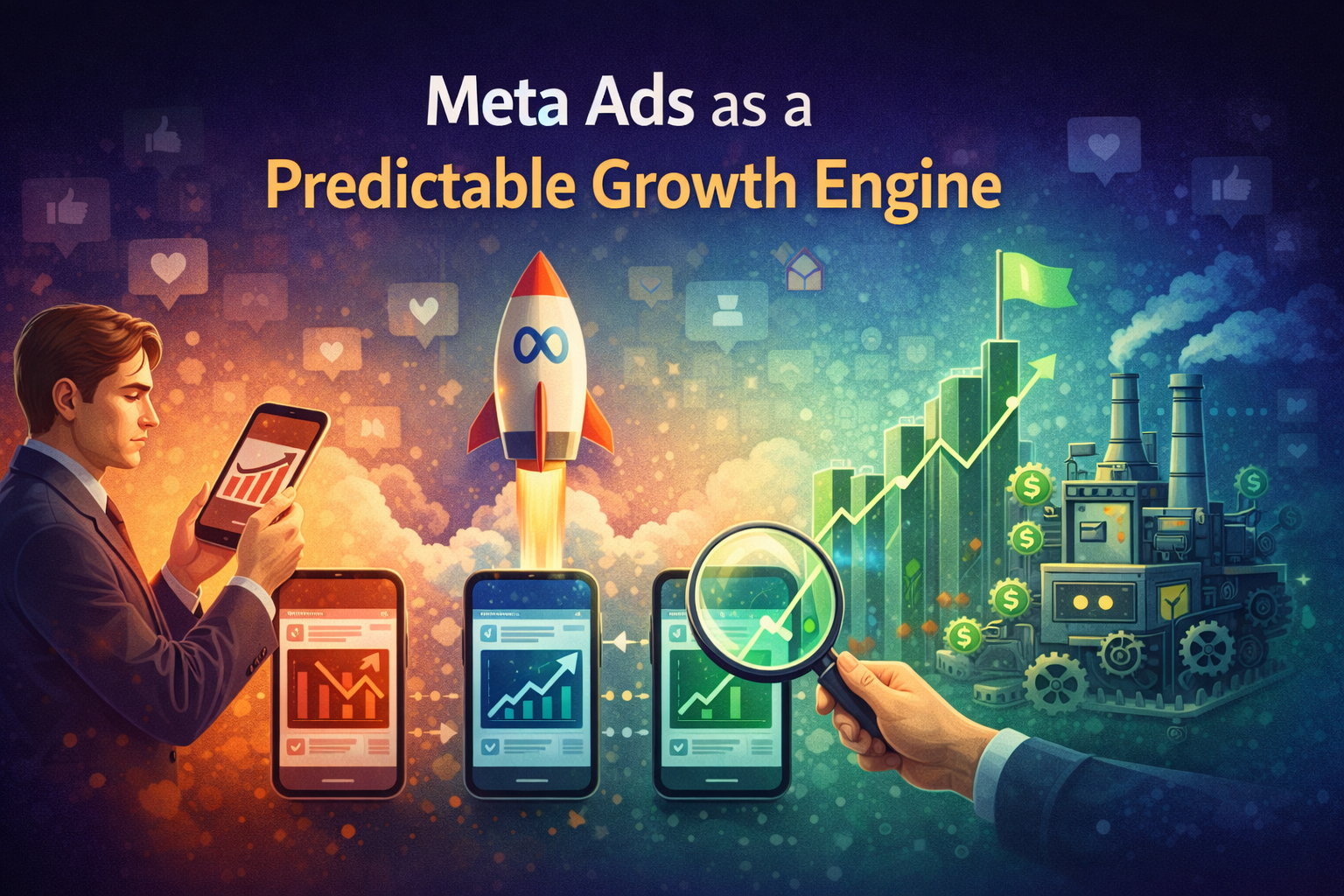
Meta Ads have evolved beyond simple lead generation into a reliable growth system for modern brands. When executed strategically, they deliver consistency, scalability, and long-term business impact not just short-term results.
Brands that scale predictably don’t rely on guesswork they build structured advertising systems. Meta Ads become powerful when aligned with real business objectives and long-term planning.
Table of Contents
Introduction: Why Some Brands Win Consistently With Meta Ads
What Separates Successful Meta Advertisers From Everyone Else
Aligning Meta Ads With Real Business Objectives
Building Creatives That Support Scale, Not Just Clicks
Audience Strategy That Evolves With Performance
Structuring Campaigns for Stability and Growth
Budget Allocation That Protects ROI
Using Data to Improve Decisions, Not Create Confusion
Retargeting Strategies That Feel Natural, Not Pushy
How Meta Ads Support Long-Term Brand Authority
Common Execution Gaps Brands Ignore
Why Some Brands Win Consistently With Meta Ads
While many businesses struggle with Meta Ads, a smaller group achieves steady, predictable growth. The difference is not luck or budget, it is disciplined execution, realistic expectations, and alignment between advertising and business fundamentals.
Meta Ads help businesses build consistent demand, control acquisition costs, and transform advertising into a reliable, scalable growth system.
What Separates Successful Meta Advertisers From Everyone Else
Successful advertisers approach Meta Ads as a long-term system rather than a short-term traffic source or lead machine.
Key differentiators include:
They prioritize learning and optimization over instant profitability in the early stages of campaign testing.
They invest heavily in creative strategy instead of relying on targeting tricks or narrow audience definitions.
They understand that Meta Ads support the sales process rather than replacing it entirely.
They build internal processes to review performance weekly, not react emotionally to daily fluctuations.
Aligning Meta Ads With Real Business Objectives
Meta Ads perform best when campaign goals match actual business outcomes rather than surface-level metrics.
Strong alignment looks like:
Campaign objectives chosen based on sales readiness, not just lower cost-per-click or engagement numbers.
Clear definitions of what qualifies as a meaningful lead or conversion for the sales team.
Budget decisions tied to revenue impact rather than vanity performance indicators.
Continuous feedback between marketing and sales teams to refine audience quality and messaging accuracy.
Building Creatives That Support Scale, Not Just Clicks
Creatives designed only to attract attention often fail when budgets increase and audiences expand.
Scalable creatives typically:
Communicate value clearly within the first few seconds without relying on exaggerated claims or misleading hooks.
Address real customer pain points using language that feels conversational and grounded in reality.
Focus on explaining outcomes and processes instead of pushing discounts or urgency-based messaging.
Maintain consistent brand tone and visuals so repeated exposure builds familiarity instead of confusion.
Audience Strategy That Evolves With Performance
Audience selection is not a one-time setup but an evolving process that adapts to performance data.
Effective audience management involves:
Starting with broader audiences to allow Meta’s algorithm enough data to optimize delivery effectively.
Gradually layering in custom and lookalike audiences once reliable conversion signals are established.
Regularly reviewing audience overlap to prevent self-competition and rising acquisition costs.
Refreshing audience strategies as offers, creatives, or business priorities change over time.
Structuring Campaigns for Stability and Growth
Campaign structure directly impacts how efficiently Meta Ads learn and perform.
Stable structures usually include:
Clear separation between awareness, consideration, and conversion campaigns to avoid mixed optimization signals.
Fewer ad sets with sufficient budgets rather than many underfunded ad sets competing internally.
Consistent naming conventions to simplify analysis and long-term performance tracking.
Minimal unnecessary edits that could reset learning phases and disrupt delivery consistency.
Meta Ads: Predictable Growth Snapshot
Budget Allocation That Protects ROI
Budgeting is not about spending more, it is about spending intelligently at each stage of the funnel.
Smart budget allocation means:
Allocating a portion of spend to awareness campaigns that support future conversions indirectly.
Protecting high-performing campaigns from sudden budget spikes that can destabilize performance.
Gradually shifting budget toward campaigns that demonstrate consistent conversion quality over time.
Reviewing spend distribution weekly to ensure alignment with evolving business goals and seasonal trends.
8. Using Data to Improve Decisions, Not Create Confusion
Data should guide decisions, not overwhelm teams with unnecessary complexity.
Productive data usage includes:
Focusing on trends over time instead of reacting to single-day performance changes.
Tracking metrics that directly relate to business outcomes, such as qualified leads or sales conversions.
Comparing performance across creatives and audiences to identify repeatable success patterns.
Using insights to inform future testing rather than constantly rebuilding campaigns from scratch.
Retargeting Strategies That Feel Natural, Not Pushy
Effective retargeting reinforces interest rather than pressuring users to convert prematurely.
Healthy retargeting approaches:
Show educational or testimonial-based content before introducing strong conversion messaging.
Adjust messaging based on how users previously interacted with ads or website content.
Limit frequency to avoid fatigue and negative brand perception.
Refresh retargeting creatives regularly to maintain relevance and engagement.
How Meta Ads Support Long-Term Brand Authority
Meta Ads play a critical role in shaping how brands are perceived over time.
Long-term brand benefits include:
Increased brand recall that improves performance across other marketing channels.
Higher trust levels that reduce friction during sales conversations.
Stronger positioning against competitors through consistent messaging and visibility.
More efficient future campaigns due to warm audiences and prior exposure.
Common Execution Gaps Brands Ignore
Even experienced advertisers overlook small issues that quietly reduce performance.
Frequently ignored gaps include:
Weak alignment between ad messaging and landing page content.
Inconsistent follow-up processes after lead submission.
Delayed creative refresh cycles leading to audience fatigue.
Measuring success without connecting advertising data to actual revenue outcomes
“Predictable growth doesn’t come from chasing clicks, it comes from building systems that earn attention, trust, and consistency over time.”
Conclusion
Meta Ads become a predictable growth engine when brands focus on systems, consistency, and strategic clarity. Sustainable success comes from disciplined execution, not shortcuts.
When these elements work together, growth becomes repeatable instead of reactive. Brands stop guessing and start scaling with confidence.
FAQs



Post a Review