
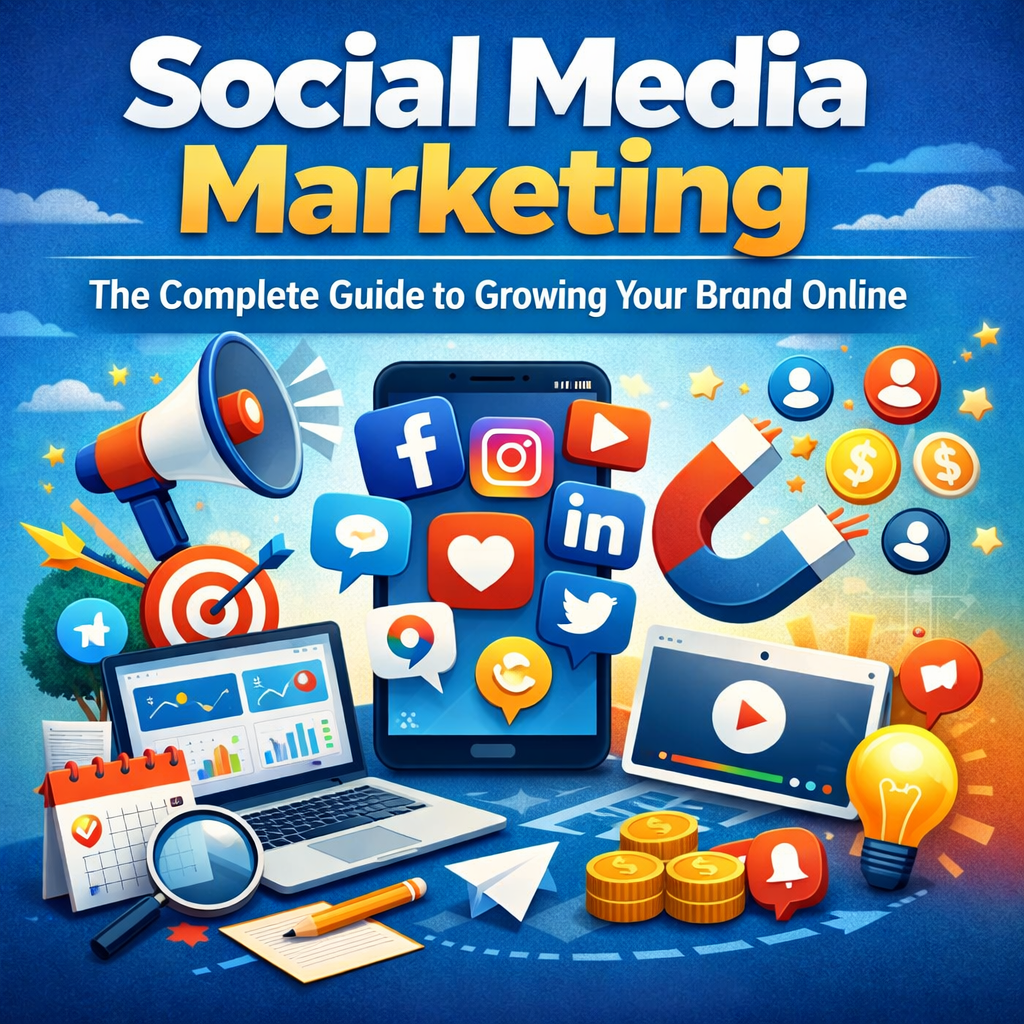
Social Media Marketing: The Complete Guide to Growing Your Brand Online

In today’s digital-first world,social media marketing has become one of the most powerful ways for businesses to connect with customers, build trust, and drive measurable growth. Whether you run a startup, local business, or established company, social media marketing helps you reach the right audience at the right time with the right message. This guide explains what social media marketing is, why it matters in 2026, and how you can create a results-driven strategy without making your brand feel overly promotional. Introduction to Social Media Marketing What Is Social Media Marketing? Why Social Media Marketing Is Essential for Businesses in 2026 Key Benefits of Social Media Marketing Core Elements of a Successful Social Media Marketing Strategy 5.1 Clear Goal Setting 5.2 Audience Research 5.3 Platform Selection 5.4 Content Planning & Creation 5.5 Using a Social Media Marketing Tool The Role of Professional Expertise in Social Media Marketing Featuring Web Digital Mantra Organic vs Paid Social Media Marketing Measuring Social Media Marketing Success Common Mistakes to Avoid in Social Media Marketing Future Trends in Social Media Marketing Frequently Asked Questions (FAQ) Conclusion: Building Long-Term Growth with Social Media Marketing Social media marketing is the process of using social platforms to promote products or services, build brand awareness, generate leads, and engage with customers. It combines content creation, paid advertising, analytics, and community management to create meaningful online interactions. It typically includes: Organic content posting Influencer collaborations Community engagement Performance tracking and analytics When implemented correctly, social media marketing becomes a long-term brand-building asset rather than just a promotional tool. The digital landscape continues to evolve rapidly. Platforms like Facebook, Instagram, LinkedIn, YouTube, and X are not just communication channels; they are full-scale marketing ecosystems. Increased Brand Awareness – Reach thousands (or millions) of users instantly Targeted Advertising – Show ads based on age, location, interests, and behavior Improved Customer Engagement – Direct communication builds trust Cost-Effective Growth – More affordable than many traditional channels Measurable Results – Track clicks, conversions, reach, and ROI Businesses that invest in strategic social media marketing gain a competitive advantage in both visibility and customer loyalty. Start with specific goals such as: Brand awareness Lead generation Website traffic Sales conversions Community building Clear goals help shape content and campaign structure. Understanding your target audience is crucial. Identify: Demographics Interests Online behavior Preferred platforms Audience insights allow you to personalize content rather than broadcast generic messages. Not every business needs to be present on every platform. In social media marketing, selecting the right platform ensures better engagement, stronger brand positioning, and improved ROI. Below is a detailed breakdown of each platform: Facebook remains one of the most versatile platforms in social media marketing. Best For: Local businesses Community building Paid advertising campaigns Event promotions Content Type: Informative posts Promotional ads Community group discussions Customer testimonials Live videos Facebook’s advanced targeting system makes it ideal for businesses looking to generate leads and increase local visibility. Instagram is highly visual and works exceptionally well for brands that rely on aesthetics and storytelling. Best For: Fashion and lifestyle brands Food and hospitality businesses Influencer collaborations Brand awareness campaigns Content Type: Reels (short-form videos) Stories Carousel posts High-quality images Behind-the-scenes content Instagram is powerful for engagement and brand personality development within social media marketing strategies. LinkedIn is the leading platform for professional networking and B2B growth. Best For: B2B companies Professional services Corporate branding Recruitment marketing Content Type: Thought leadership articles Industry insights Case studies Company updates Professional networking posts LinkedIn helps businesses build authority and credibility in their industry. YouTube is ideal for long-form content and educational marketing. Best For: Tutorials and how-to guides Product demonstrations Educational content Brand storytelling Content Type: Explainer videos Webinars Customer testimonials In-depth product reviews YouTube strengthens brand trust by providing valuable and informative content. X focuses on real-time conversations and trending topics. Best For: Real-time updates Brand voice development News and announcements Trend participation Content Type: Short updates Trending discussions Industry news Quick engagement posts X is useful for brands that want to stay active in current conversations and respond quickly to audience interactions. Selecting the right platform improves efficiency and return on investment. Content is the backbone of social media marketing. Focus on: Educational posts Entertaining content User-generated content Behind-the-scenes updates Short-form videos Consistency builds recognition and trust over time. Managing multiple platforms manually can be overwhelming. That’s where asocial media marketing toolbecomes helpful. A good marketing tool helps with: Content scheduling Performance tracking Audience insights Campaign management Automated reporting Using the right social media marketing tool improves productivity and ensures your strategy stays data-driven rather than guess-based. While many businesses attempt DIY marketing, structured strategy and expert execution often produce stronger results. Web Digital Mantra, a professional social media marketing agency, focuses on creating data-backed strategies that align with business goals. Instead of pushing sales-heavy campaigns, their approach emphasizes: Brand positioning Audience engagement Performance analytics Consistent content storytelling Partnering with experienced professionals ensures that your social media marketing efforts remain sustainable and scalable. Both approaches play an important role. Builds long-term brand trust Focuses on content and engagement Cost-effective but slower growth Delivers faster results Highly targeted campaigns Scalable for lead generation A balanced strategy that integrates both methods often delivers the best results. Tracking performance ensures continuous improvement. Engagement rate Reach and impressions Click-through rate (CTR) Conversion rate Cost per lead Return on ad spend (ROAS) Modern analytics tools make it easier to identify what works and refine your strategy accordingly. Posting without a strategy Ignoring analytics Over-promoting products Inconsistent branding Not engaging with followers Effective social media marketing focuses on conversation, not constant selling. The future of social media marketing includes: AI-powered content creation Short-form vertical videos Community-driven marketing Personalized advertising Data-focused strategy optimization Brands that adapt early often gain stronger digital authority. Social media marketing is the process of promoting your business through social platforms to increase brand awareness, generate leads, and build customer relationships. It works by creating valuable content, running targeted ads, engaging with followers, and analyzing performance data to improve results over time. Social media marketing helps small businesses: Reach a larger audience at a lower cost Compete with bigger brands Build trust through consistent engagement Generate local and online leads With the right strategy and a reliable social media marketing tool, even small businesses can achieve measurable growth. The best platform depends on your business goals: Facebook – Community building & local ads Instagram – Visual branding & reels LinkedIn – B2B marketing & professional networking YouTube – Educational and long-form video content X – Real-time updates and conversations A professional agency like Web Digital Mantra can help identify the right platform mix based on your industry and target audience. Posting frequency depends on the platform and strategy. Generally: 3–5 posts per week for most businesses Daily stories or short updates Consistent engagement with comments and messages Quality and consistency matter more than high posting volume. Organic social media marketing focuses on unpaid content, engagement, and long-term brand building. Paid social media marketing involves running advertisements to reach targeted audiences quickly. A balanced approach usually delivers the best results. Organic growth may take 3–6 months to show strong results. Paid campaigns can generate leads and traffic much faster. However, sustainable success in social media marketing requires continuous optimization and strategic planning. Using a social media marketing tool is highly recommended. It helps with: Scheduling posts Tracking performance metrics Managing multiple platforms Generating analytics reports These tools improve efficiency and support data-driven decision-making. Web Digital Mantra provides strategic planning, content creation, audience targeting, and analytics tracking to ensure your social media marketing campaigns align with your business objectives. Their focus is on long-term brand growth rather than aggressive sales promotion. Budgets vary based on goals, industry, and competition. Small businesses can start with a modest monthly ad spend and scale gradually based on performance data and ROI. Success is measured through: Engagement rate Website traffic Lead generation Conversion rate Return on ad spend (ROAS) Regular monitoring and strategy adjustments are essential for continuous improvement. In 2026, social media marketing is no longer optional; it is a fundamental part of business growth. From brand awareness to lead generation and customer loyalty, social media marketing provides measurable opportunities for expansion. By combining strong content, the right social media marketing tool, and expert guidance from agencies like Web Digital Mantra, businesses can build a sustainable digital presence without appearing overly promotional. When done strategically, social media marketing becomes more than just posting content—it becomes a powerful system for long-term success.Blog Index – Social Media Marketing Guide
What Is Social Media Marketing?
Why Social Media Marketing Is Essential for Businesses in 2026
Key Benefits of Social Media Marketing
Core Elements of a Successful Social Media Marketing Strategy
1. Clear Goal Setting
2. Audience Research
3. Choose Platforms Strategically in Social Media Marketing
1. Facebook – Best for Local Businesses & Paid Advertising
2. Instagram – Best for Visual Brands
3. LinkedIn – Best for B2B Marketing
4. YouTube – Best for Tutorials & Long Videos
5. X – Best for Real-Time Engagement
4. Content Planning & Creation
5. Social Media Marketing Tools for Better Performance
The Role of Professional Expertise in Social Media Marketing
Organic vs Paid Social Media Marketing
Organic Social Media Marketing
Paid Social Media Marketing
Measuring Social Media Marketing Success
Important Metrics to Monitor
Common Mistakes to Avoid in Social Media Marketing
Future Trends in Social Media Marketing
Frequently Asked Questions (FAQ) – Social Media Marketing
1. What is social media marketing, and how does it work?
2. Why is social media marketing important for small businesses?
3. Which platforms are best for social media marketing?
4. How often should I post on social media?
5. What is the difference between organic and paid social media marketing?
6. How long does it take to see results from social media marketing?
7. Do I need a social media marketing tool?
8. How can Web Digital Mantra help with social media marketing?
9. What budget is required for social media marketing?
10. How do I measure success in social media marketing?
Conclusion: Building Long-Term Growth with Social Media Marketing




Post a Review