

Meta Ads That Convert Attention Into Action

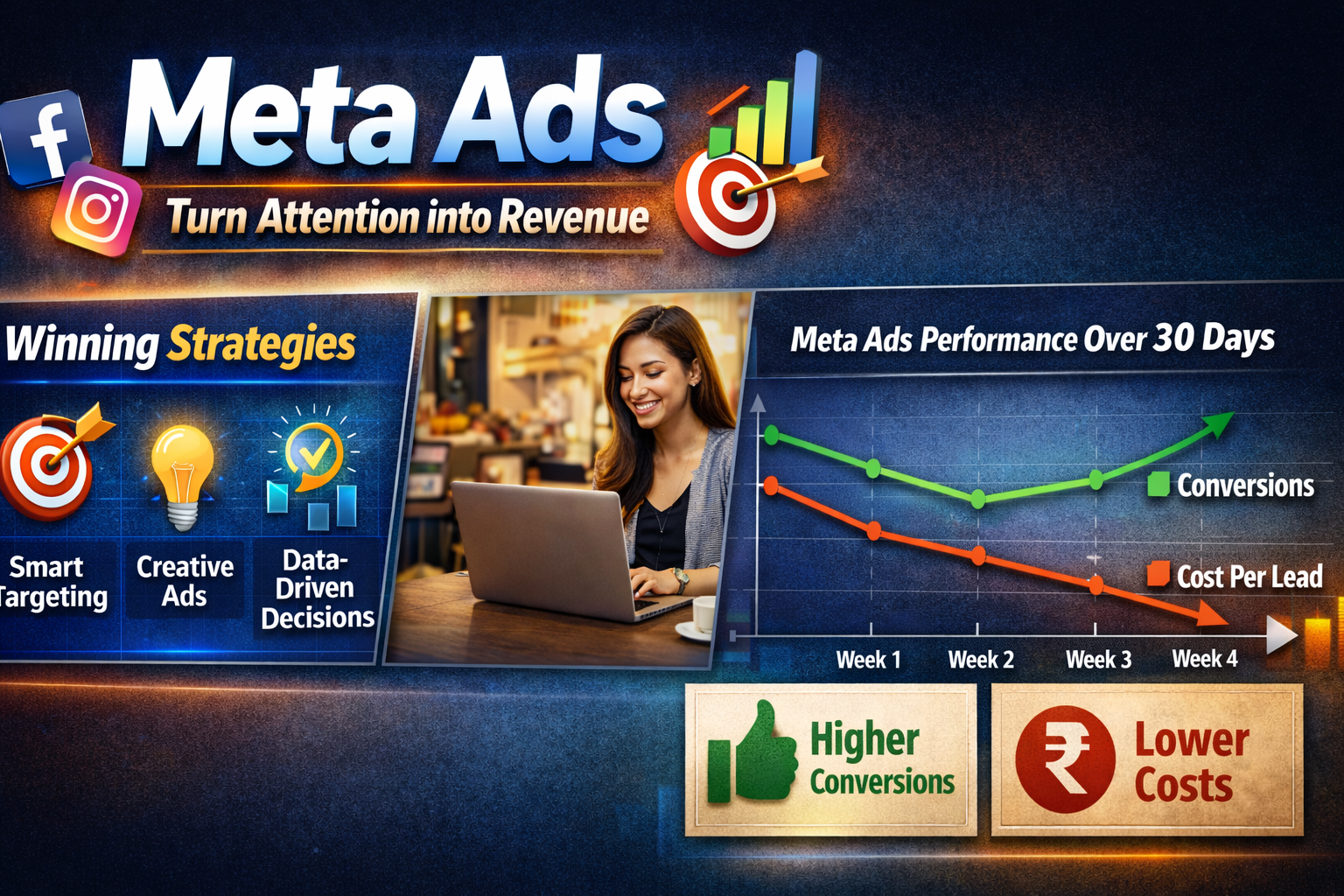
Meta Ads (Facebook & Instagram Ads) are no longer just about visibility. For businesses today, they are a performance engine capable of generating leads, sales, and brand trust when used strategically.
Many brands run ads, but only a few truly understand how Meta Ads work beyond boosting posts. This blog explains Meta Ads from a business and user perspective, shares a practical case study, and highlights what actually drives results in 2025.
Table of Contents
Introduction to Meta Ads & Their Business Impac
-
Why Meta Ads Work in Today’s Digital Landscape
-
Understanding User Behavior on Meta Platforms
-
How Meta Ads Function Behind the Algorithm
-
High-Performing Meta Ad Formats
-
Creative Testing & Storytelling in Meta Ads
-
Targeting, Tracking & Data Accuracy
-
Budgeting, Scaling & Performance Control
-
Case Study: Real Business Growth Using Meta Ads
-
Landing Pages & Conversion Experience
-
Meta Ads vs Other Paid Marketing Channels
-
Long-Term Brand Growth with Meta Ads
-
Common Mistakes & Optimization Signals
-
Meta Ads Performance Insights (Graph)
-
The Future of Meta Ads
-
Frequently Asked Questions (FAQs)
Why Meta Ads Still Dominate Digital Advertising
Despite new platforms and rising competition, Meta Ads continue to deliver strong ROI because of one key advantage: intent-based targeting blended with behavioral data.
Meta doesn’t wait for users to search.
It places your message before the right audience at the right moment.
What makes Meta Ads powerful:
Access to Facebook, Instagram, Messenger, and Audience Network
Advanced interest, behavior, and custom targeting
Creative-first advertising formats
Real-time optimization powered by machine learning
For small businesses, startups, and service providers, this combination is hard to beat.
Understanding Meta Ads from a User’s Perspective
To run effective ads, you must first understand how users experience Meta Ads.
Users don’t open Instagram to buy they open it to:
Scroll
Watch reels
Check stories
Connect with people
Successful Meta Ads blend naturally into this behavior.
What users respond to:
Content that looks organic, not “salesy”
Real people, not stock images
Clear value in the first 3 seconds
Short, honest messaging
Ads that interrupt feel ignored.
Ads that connect emotionally get clicks.
How Meta Ads Work Behind the Scenes
Meta Ads operate on an auction system but not just the highest bidder wins.
Meta evaluates ads based on:
Bid – How much you’re willing to pay
Estimated Action Rate – Likelihood of user engagement
Ad Quality – Feedback, relevance, and experience
This means:
A well-crafted ad with a smaller budget can outperform a poorly designed ad with a large budget.
That’s where strategy matters more than spending.

Types of Meta Ads That Actually Perform Well
Instead of listing every format, let’s focus on what works in real campaigns.
1. Reels Ads (High Engagement)
Short vertical videos that feel native
Best for:
Brand awareness
Product discovery
First-time audiences
2. Carousel Ads (Comparison & Features)
Multiple slides to tell a story
Best for:
E-commerce
Service breakdowns
Step-by-step offers
3. Lead Form Ads (Low Friction)
Users submit details without leaving the app
Best for:
Service businesses
Real estate
Education & finance
4. Retargeting Ads (Highest ROI)
Shown to users who already interacted
Best for:
Abandoned carts
Website visitors
Instagram profile visitors
The Role of Creative Testing in Meta Ads Success
Running one ad and expecting results is risky. Creative testing helps identify what truly resonates with your audience.
This involves testing:
Different hooks in the first 3 seconds
Visual styles (UGC vs branded creatives)
Messaging angles (problem-focused vs solution-focused)
Even small creative changes can significantly reduce cost per result.
How Meta Ads Support Customer Journey Stages
Meta Ads are effective across every stage of the buyer journey.
Awareness stage: Short videos and reels build familiarity
Consideration stage: Carousel and testimonial ads create trust
Decision stage: Retargeting ads push conversions

Using Meta Ads only for selling limits their full potential.
Importance of Landing Page Experience in Meta Ads
A high-performing ad can still fail if the landing page experience is weak.
Key landing page factors:
Page load speed
Clear headline matching the ad message
Simple call-to-action
Mobile optimization
Meta Ads reward better user experience with lower costs.
How Meta Pixel and Conversions API Improve Ad Accuracy
Tracking tools help Meta understand user behavior more accurately.
Meta Pixel and Conversions API:
Track actions beyond clicks
Improve event matching
Strengthen retargeting
Enhance algorithm learning
Better data leads to smarter ad delivery.
Scaling Meta Ads Without Increasing Risk
Scaling is not about doubling the budget overnight.
Safer scaling methods include:
Gradual budget increases
Duplicating winning ad sets
Expanding audiences slowly
Refreshing creatives before scaling
This approach protects performance stability.
Meta Ads vs Other Paid Advertising Channels
Meta Ads perform differently compared to search or marketplace ads.
Meta Ads create demand
Search ads capture demand
Display ads build awareness
Smart marketers use Meta Ads alongside other channels, not in isolation.
How Consistent Branding Improves Meta Ads Performance
Repeated exposure builds trust.
Consistency in:
Colors
Messaging tone
Visual style
helps users recognize your brand faster, improving engagement and conversions.
Using Storytelling to Increase Meta Ads Engagement
Story-driven ads outperform direct promotions.
Effective storytelling includes:
Relatable problems
Real people or experiences
Simple outcomes
Stories feel human users engage more.
When to Pause, Edit, or Kill a Meta Ad
Not every ad deserves more budget.
Pause or stop ads when:
CTR keeps dropping
Frequency rises too fast
Lead quality declines
Data should guide decisions, not assumptions.
Why Meta Ads Are Ideal for Service-Based Businesses
Service businesses benefit from:
Lead form ads
Local targeting
Retargeting warm audiences
Meta Ads help services sell trust, not just offers.
Case Study: How a Local Business Used Meta Ads to Scale
Business Type:
Local service-based business (digital services)
Problem:
Low website traffic
No consistent leads
Organic reach declining
Strategy Used:
Audience Setup
Custom audience from website visitors
Lookalike audience based on inquiries
Interest targeting for cold traffic
Creative Approach
Founder-led video explaining the problem
No hard selling
Clear pain point + simple solution
Campaign Structure
Awareness campaign → Engagement → Lead generation
Separate ad sets for testing creatives
Results in 30 Days:
3.5x increase in inquiries
Cost per lead reduced by 42%
Higher trust due to repeated visibility
Key Learning:
Ads worked not because of the budget but because the message felt real.
Common Meta Ads Mistakes Businesses Still Make
Even experienced advertisers fall into these traps:
Running ads without a clear goal
Targeting too broad or too narrow
Using the same creative for months
Ignoring comments and messages
Sending traffic to slow or confusing landing pages
Meta Ads amplify what already exists.
If the foundation is weak, ads expose it faster.
Smart Targeting Strategies That Improve Results
Custom Audiences (Most Valuable)
Website visitors
Instagram engagers
Video viewers
Email lists

Lookalike Audiences
Meta finds people similar to your best customers.
Broad Targeting (With Strong Creatives)
Let Meta’s algorithm learn and optimize automatically works best with good data and content.
Budgeting Meta Ads the Right Way
You don’t need a huge budget but you do need consistency.
Practical budgeting tips:
Start small, scale gradually
Give ads time to exit the learning phase
Allocate budget based on performance, not assumptions
Avoid switching creatives daily
How Meta Ads Support Long-Term Brand Growth
Meta Ads are not just for leads or sales.
They help businesses:
Stay visible in competitive markets
Build brand recall
Create trust through repetition
Support SEO and organic efforts indirectly
When users see your brand repeatedly, conversions become easier everywhere else.
Measuring What Matters in Meta Ads
Forget vanity metrics.
Focus on:
Cost per result
Click-through rate (CTR)
Conversion rate
Quality of leads
Return on ad spend (ROAS)
Data tells the story if you listen to it.
The Future of Meta Ads in 2025 and Beyond
Meta Ads are becoming:
- More AI-assisted
- More privacy-focused
- More creative-driven
This means:
Strong messaging > aggressive targeting
Authentic content > polished ads
Strategy > automation alone
Businesses that adapt will continue to win.
Final Thoughts
Meta Ads are not a shortcut, they are a multiplier.
When strategy, creativity, and audience understanding come together, Meta Ads become one of the most powerful growth tools available to modern businesses.
Whether you’re a startup, local service provider, or growing brand, success with Meta Ads depends on clarity, consistency, and connection.
FAQs
1. Are Meta Ads effective for small businesses?
Yes. With proper targeting and creative strategy, small businesses often see better ROI than large brands.
2. How much budget is required to start Meta Ads?
You can start effectively with as little as ₹300–₹500 per day and scale based on performance.
3. Which Meta Ad format gives the best results?
Reels ads and retargeting ads currently deliver the highest engagement and conversions.
4. How long does it take to see results from Meta Ads?
Initial insights appear within 7–10 days, while stable performance improves after the learning phase.
5. Can Meta Ads work without a website?


Post a Review